Seasonal Weather Patterns Reshaping Accumulator Strategies Across Football, Tennis, and Basketball
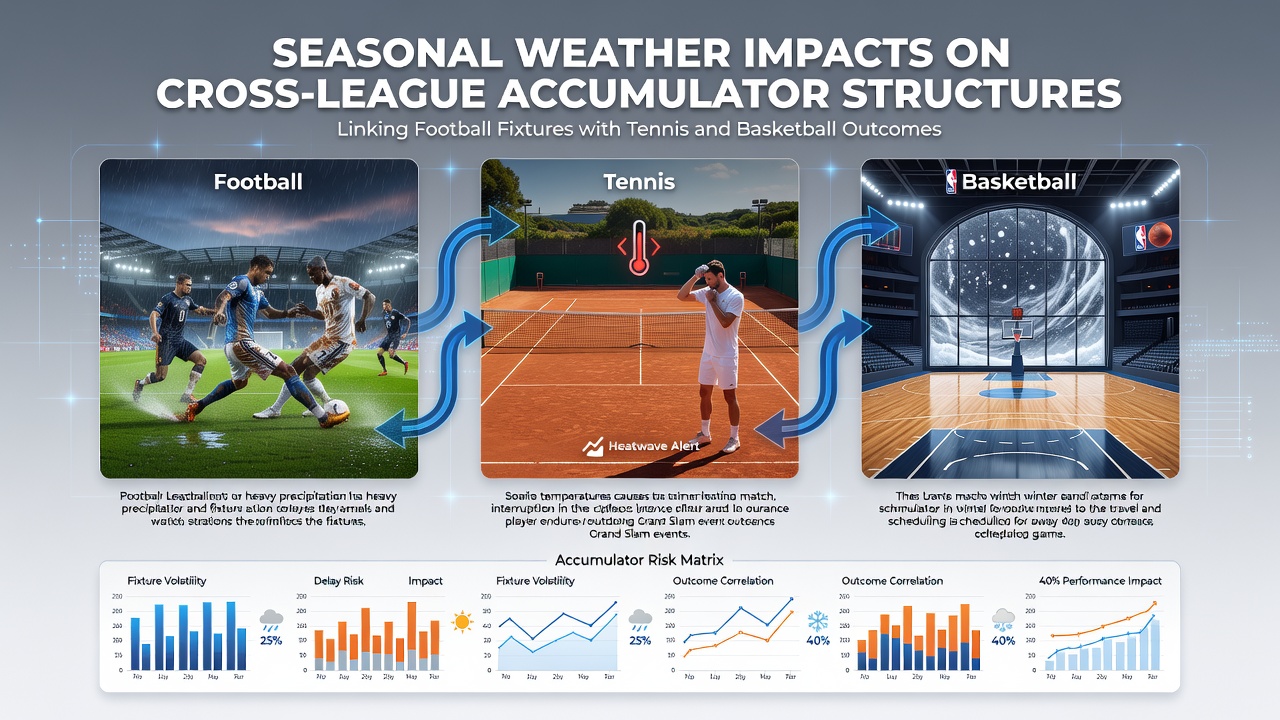
Seasonal shifts in temperature, precipitation, and wind create measurable changes in match conditions across football, tennis, and basketball, and these alterations feed directly into the construction and performance of cross-league accumulator bets that combine outcomes from all three sports. Data collected by meteorological agencies and sports performance analysts show consistent patterns where rain, heat, or cold modify scoring rates, injury risks, and playing surfaces in ways that bettors must account for when linking fixtures into multi-leg wagers.
Football Fixture Responses to Weather Variability
Football matches played on natural grass experience the clearest surface-level effects from seasonal weather. Heavy rainfall saturates pitches, reduces ball speed, and increases the likelihood of fewer goals, while extreme heat leads to higher substitution rates and slower tempo as documented in European league records. Observers note that winter months in northern Europe correlate with more draws and lower totals, whereas summer schedules in southern regions produce elevated goal counts when temperatures remain moderate. These statistical tendencies become building blocks for accumulator legs because bettors pair them with tennis and basketball selections that share similar weather windows.
Tennis Tournament Adjustments During Changing Seasons
Outdoor tennis events adjust scheduling and playing conditions based on seasonal forecasts. Clay courts in Europe absorb moisture differently than hard courts in North America, and wind speeds above 20 km/h alter serve percentages and rally lengths according to tournament data releases. Summer grass-court periods, including those around June, introduce faster surfaces that favor aggressive baseline play, while autumn indoor transitions reduce weather variables altogether. Researchers at sports science institutes have tracked how these court-type changes shift win probabilities for specific player archetypes, supplying quantitative inputs that accumulator builders incorporate when aligning tennis matches with concurrent football and basketball fixtures.
Basketball Performance Metrics Under Seasonal Conditions
Although most professional basketball occurs indoors, seasonal weather still influences outcomes through travel logistics, player acclimatization, and occasional outdoor or neutral-site events. High humidity periods increase fatigue during back-to-back games, and cold-weather travel in winter months correlates with slight drops in three-point shooting efficiency per league tracking systems. Summer league and exhibition schedules in June expose athletes to different training environments that carry over into early-season form. These secondary effects allow cross-league accumulators to include basketball legs whose expected values shift measurably with the calendar.
Linking Fixtures into Weather-Sensitive Accumulators
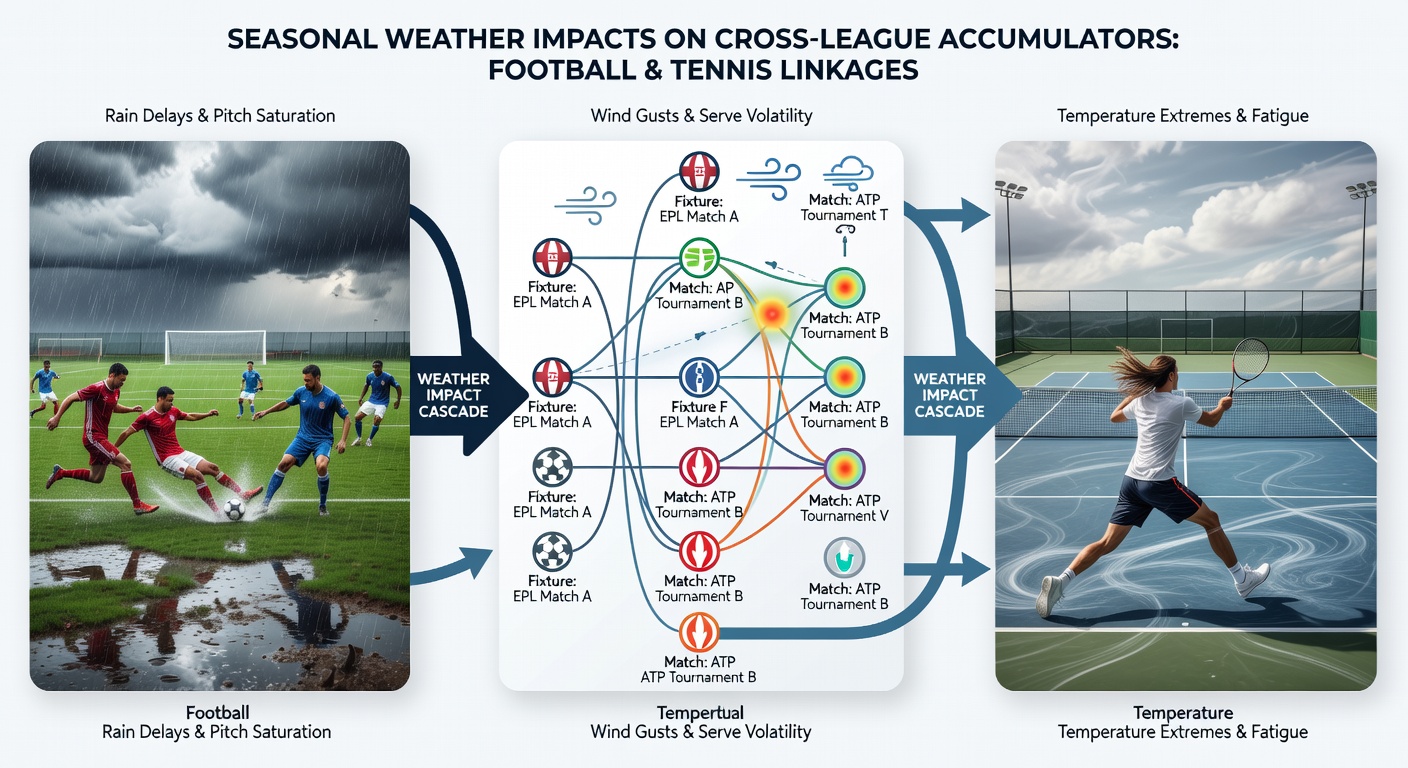
Accumulator structures gain complexity when weather forecasts span multiple sports and time zones. A single wager might combine an evening football match in northern England, an afternoon tennis session in Australia, and a morning basketball contest on the US west coast, each subject to distinct seasonal conditions. Analysts at the National Oceanic and Atmospheric Administration publish regional outlooks that sports data platforms integrate into probability models. These models adjust over/under lines and player props before bettors finalize their selections, creating layered risk profiles that reflect simultaneous weather impacts rather than isolated events.
June 2026 Considerations for Multi-Sport Structures
June 2026 coincides with the FIFA World Cup group stage alongside ongoing tennis tours and basketball off-season developments. Elevated temperatures across European and North American venues during this period historically correlate with increased hydration-related substitutions in football and altered bounce characteristics on tennis courts. Accumulator operators adjust their offerings to account for these overlapping conditions, while data from the Bureau of Meteorology in Australia supplies complementary forecasts for southern hemisphere tennis events that may appear in the same betting slips. The convergence of these schedules produces distinct accumulator clusters that differ from other months in both volume and payout distribution.
Conclusion
Weather data integration into cross-league accumulator design continues to evolve as forecasting precision improves and more granular performance statistics become available. Football pitch conditions, tennis court surfaces, and basketball travel factors each respond to seasonal patterns in documented ways, and the combination of these responses shapes the viability of multi-sport wagers throughout the calendar year, including during high-profile periods such as June 2026.