Fixture Crowding Shapes Accumulator Results Across Soccer Divisions and Basketball Circuits
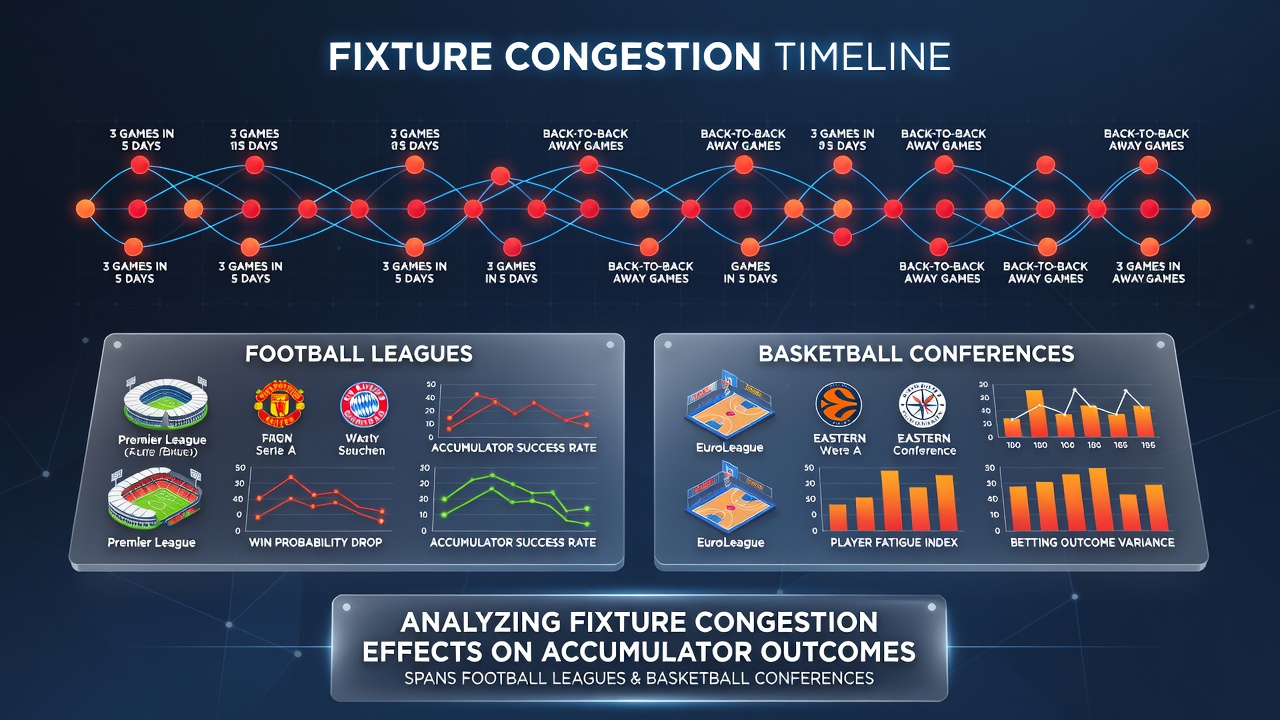
Fixture congestion arises when teams play multiple matches within short periods, and this pattern produces measurable shifts in performance metrics that directly alter accumulator outcomes in football leagues and basketball conferences. Data from sports science reviews show elevated injury rates and reduced sprint distances during such periods, which in turn increase variance in match results and complicate multi-leg betting structures.
Patterns in European Football Leagues
European domestic competitions schedule up to three matches per week during winter months and cup runs, while August 2026 sees several leagues resume after international tournaments with limited recovery windows. Researchers tracking Bundesliga and La Liga squads documented a 12 percent rise in muscle strain incidents when teams face three fixtures inside eight days, and these absences alter team lineups enough to shift expected goal totals in accumulator legs. Observers note that underdogs secure points more frequently under fatigue conditions, which raises the value of draw selections in multi-team bets yet also widens outcome dispersion across consecutive weekends.
Basketball Conference Schedules and Fatigue Indicators
NCAA conferences and professional leagues such as the NBA maintain dense calendars that include back-to-back games and travel across time zones, producing similar fatigue effects. Studies published by the American College of Sports Medicine found average player efficiency ratings drop by 8 to 10 points after consecutive road contests, and those dips correlate with higher turnover rates that affect point-spread accuracy in basketball accumulator segments. When combined with football fixtures spanning the same calendar weeks, bettors encounter compounding variables because basketball momentum swings often follow different recovery timelines than soccer muscle-fatigue patterns.
Statistical Links Between Congestion and Accumulator Variance
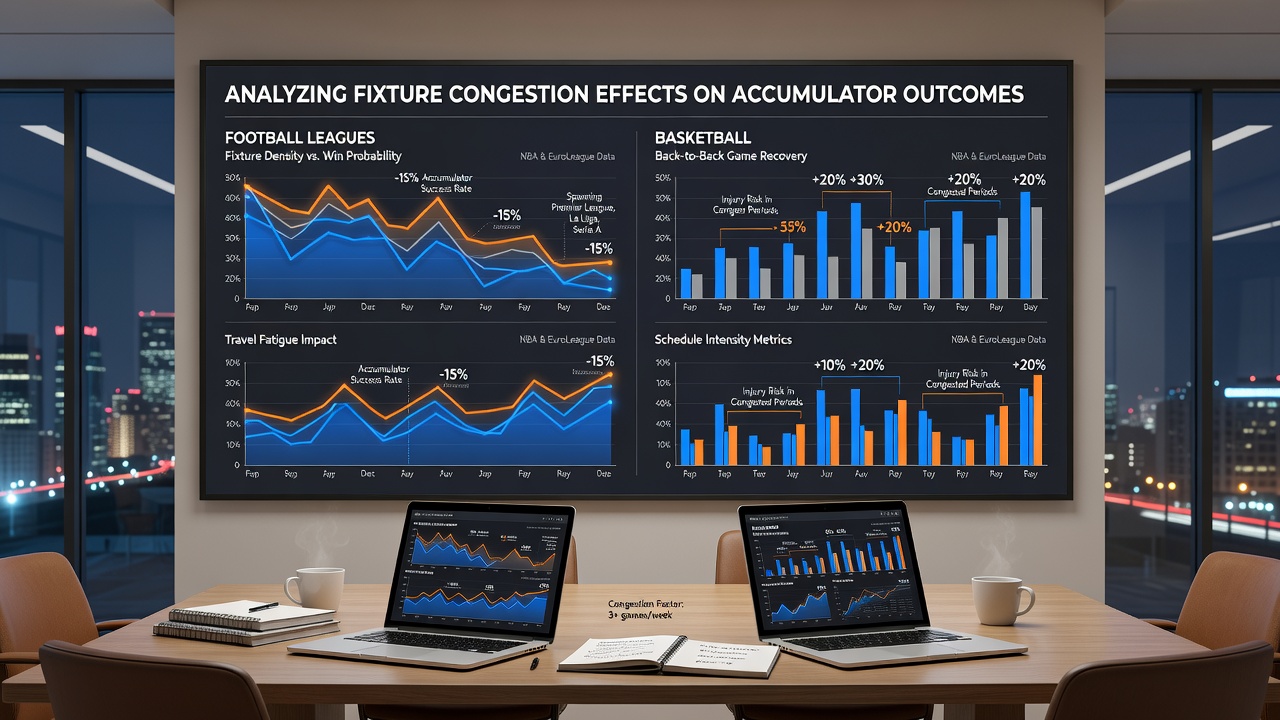
Longitudinal datasets compiled by European sports research institutes reveal that accumulator hit rates decline when three or more legs involve teams with fewer than four rest days. The same datasets indicate that home teams under congestion still retain a reduced but positive edge, whereas away performance erodes more sharply. In basketball conferences, back-to-back sets produce elevated totals in the first game of the pair yet lower scoring in the second, creating a rhythmic effect that accumulator builders must factor into leg selection. These measurable trends allow quantitative models to adjust probability inputs rather than rely on static season averages.
Cross-Sport Interactions in Multi-Leg Structures
Accumulators that mix football and basketball legs introduce additional complexity because recovery cycles differ between the two sports. Football players often manage higher eccentric loads from tackling and sprinting, while basketball athletes face repetitive jumping stress; both produce distinct injury profiles tracked by the International Olympic Committee medical commission. When a congested football weekend precedes a basketball conference slate, the probability adjustments required for each sport diverge, and models that ignore these differences show reduced calibration accuracy. Industry reports from the Australian Institute of Sport highlight how travel and load monitoring tools now supply granular data that betting analytics platforms incorporate to refine accumulator pricing.
Recovery Metrics and Their Influence on Outcome Prediction
Wearable technology and GPS tracking supply objective load metrics that correlate with subsequent performance drops. UEFA technical reports document that teams logging above 6,000 meters of high-intensity running in a midweek fixture exhibit measurable declines in pressing intensity during the following league match, and those declines appear in both expected goals and actual results. Basketball analytics from conference tournaments reveal parallel patterns where minutes played above seasonal norms predict reduced three-point accuracy. Accumulator constructors who integrate such recovery data into their selections adjust stake allocation and leg ordering accordingly, because the statistical edges shift measurably once congestion thresholds are crossed.
Conclusion
Fixture congestion generates documented changes in player availability, tactical execution, and scoring distributions that propagate through accumulator structures spanning football leagues and basketball conferences. Quantitative tracking of rest intervals, travel loads, and injury incidence supplies the factual basis for refining probability estimates, and ongoing data collection from multiple sports continues to sharpen those adjustments.